枝に生ぶ卵 とけきらぬ果実
gallerìa PONTE
Eggs Borne on Branches, Fruits Not Yet Dissolved
gallerìa PONTE
[Solo] Sep. 6-28, 2025

伝統に捉われない、新しい漆画のかたち
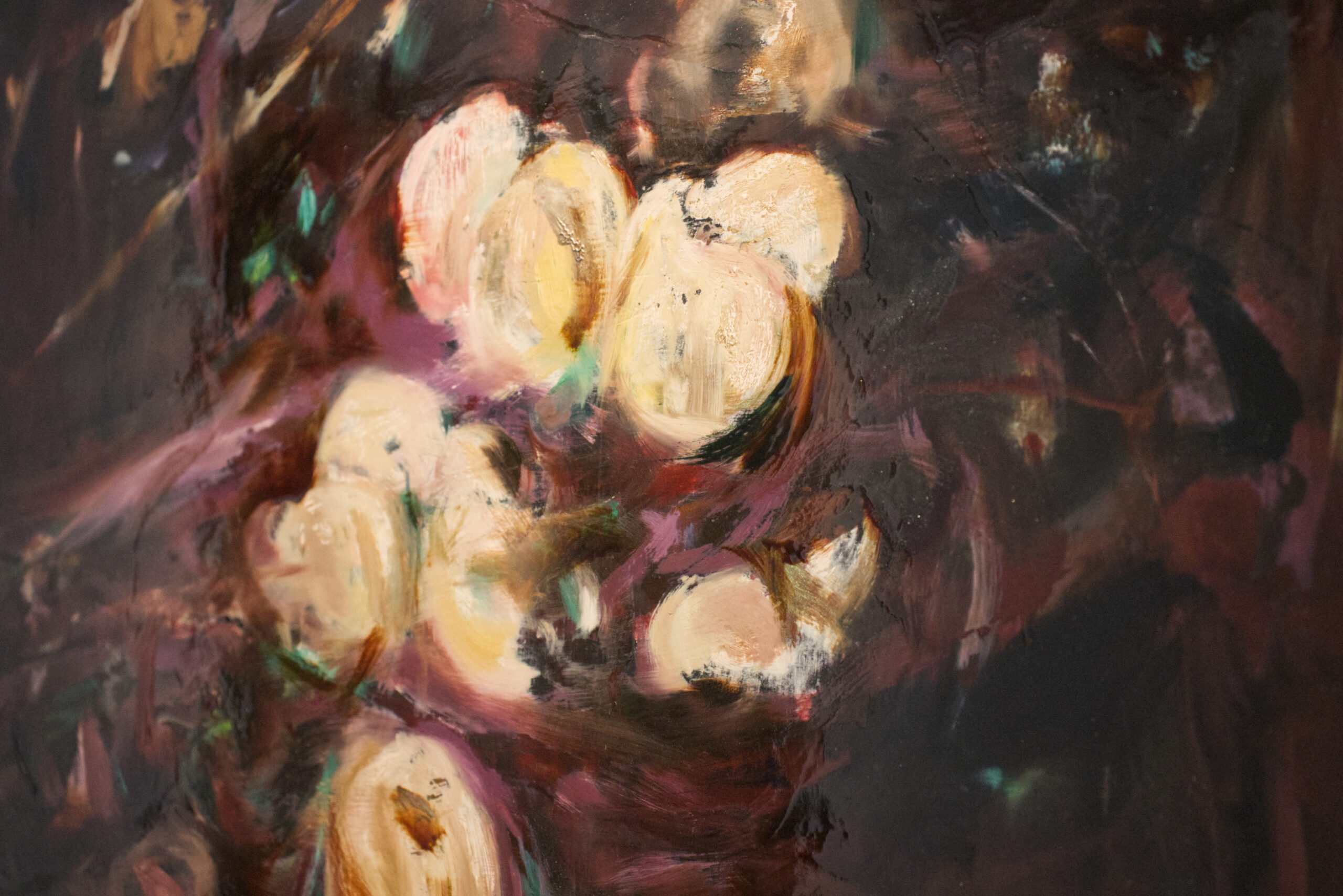
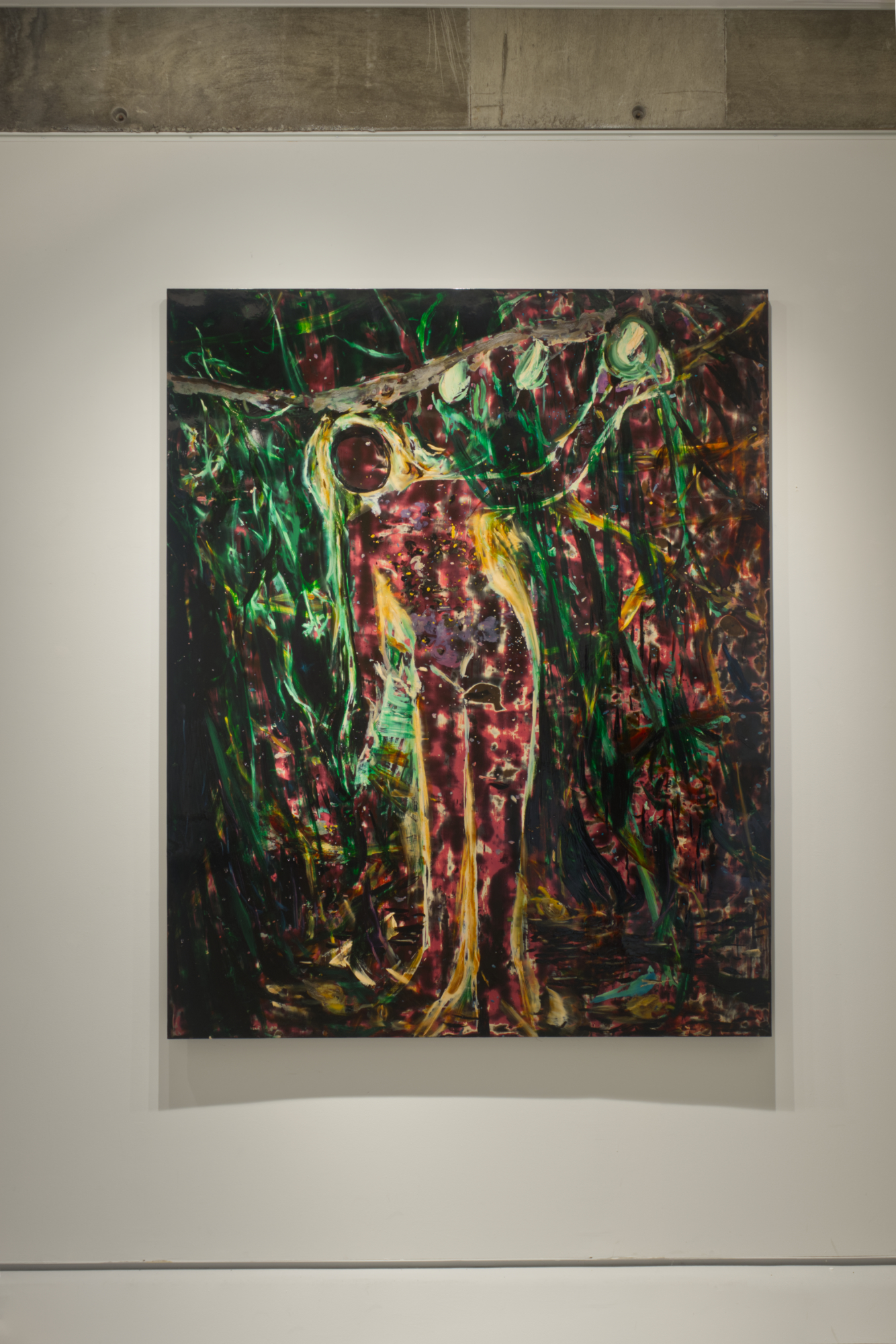
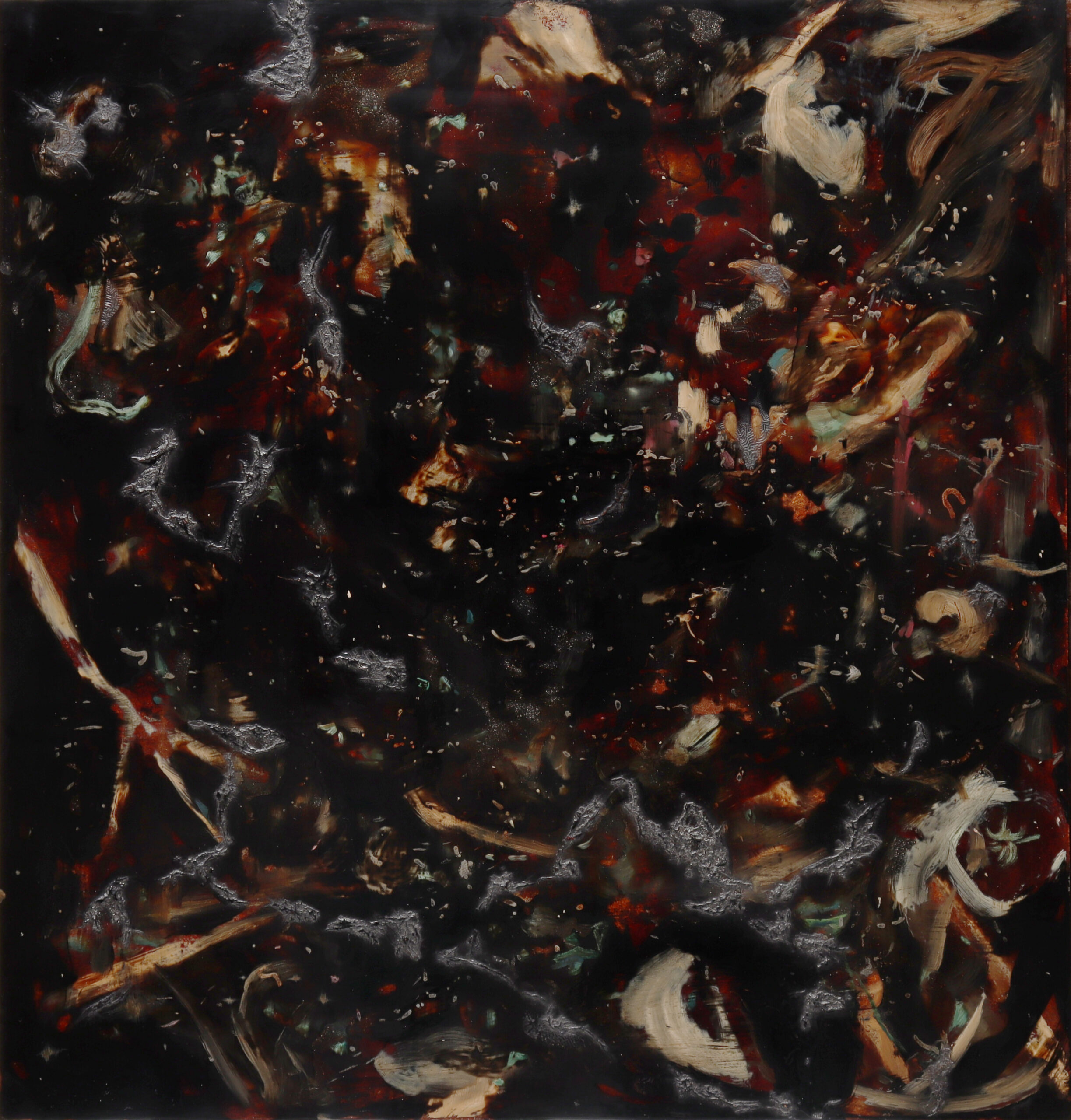
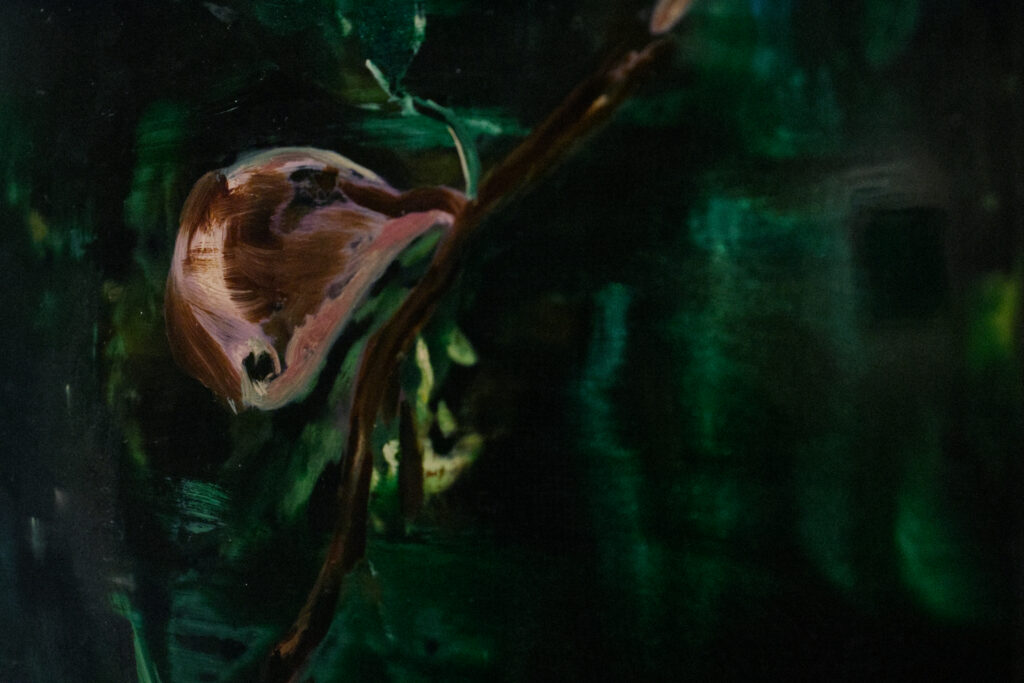
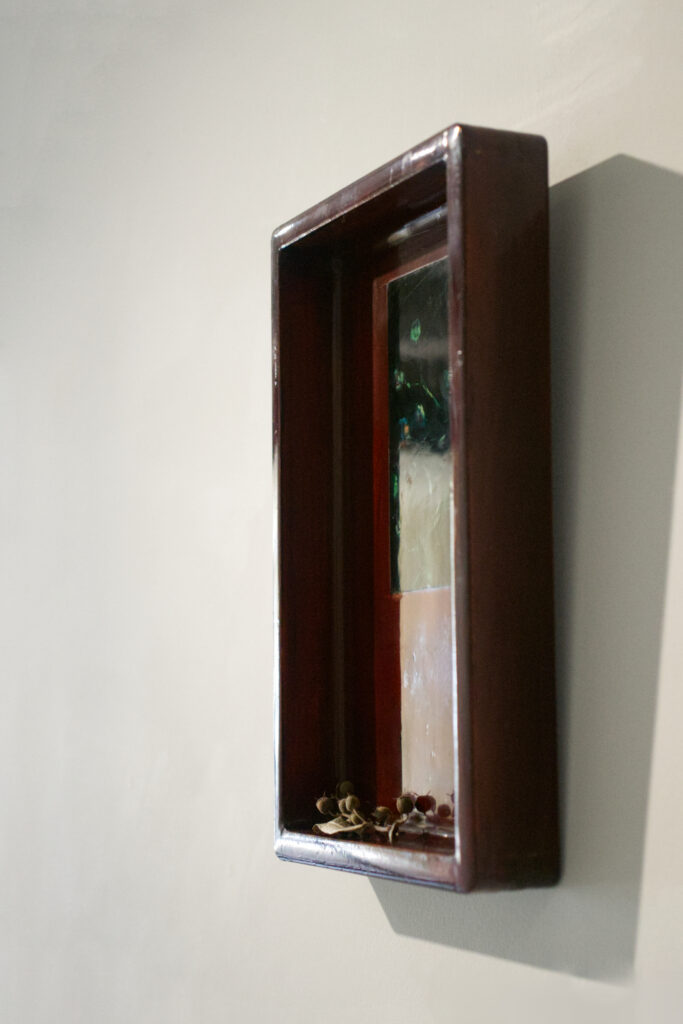
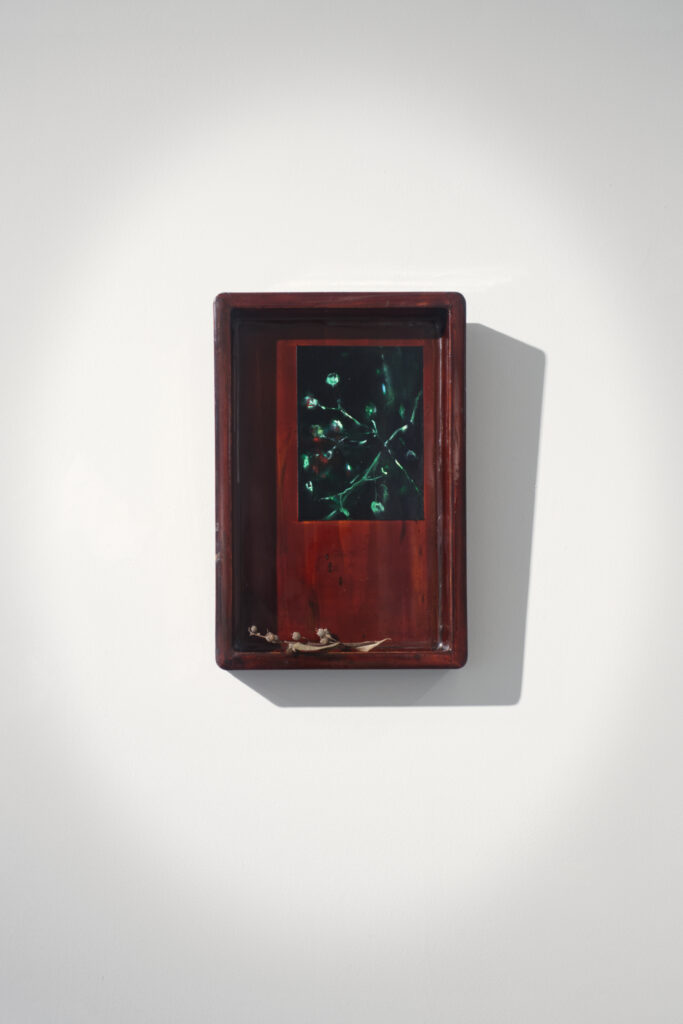
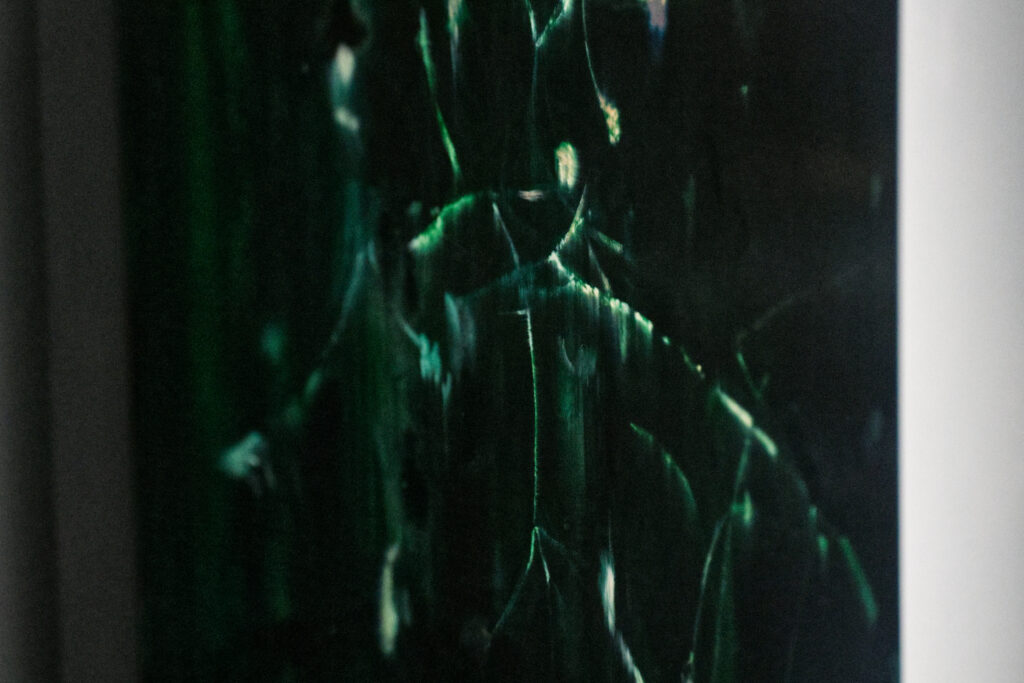
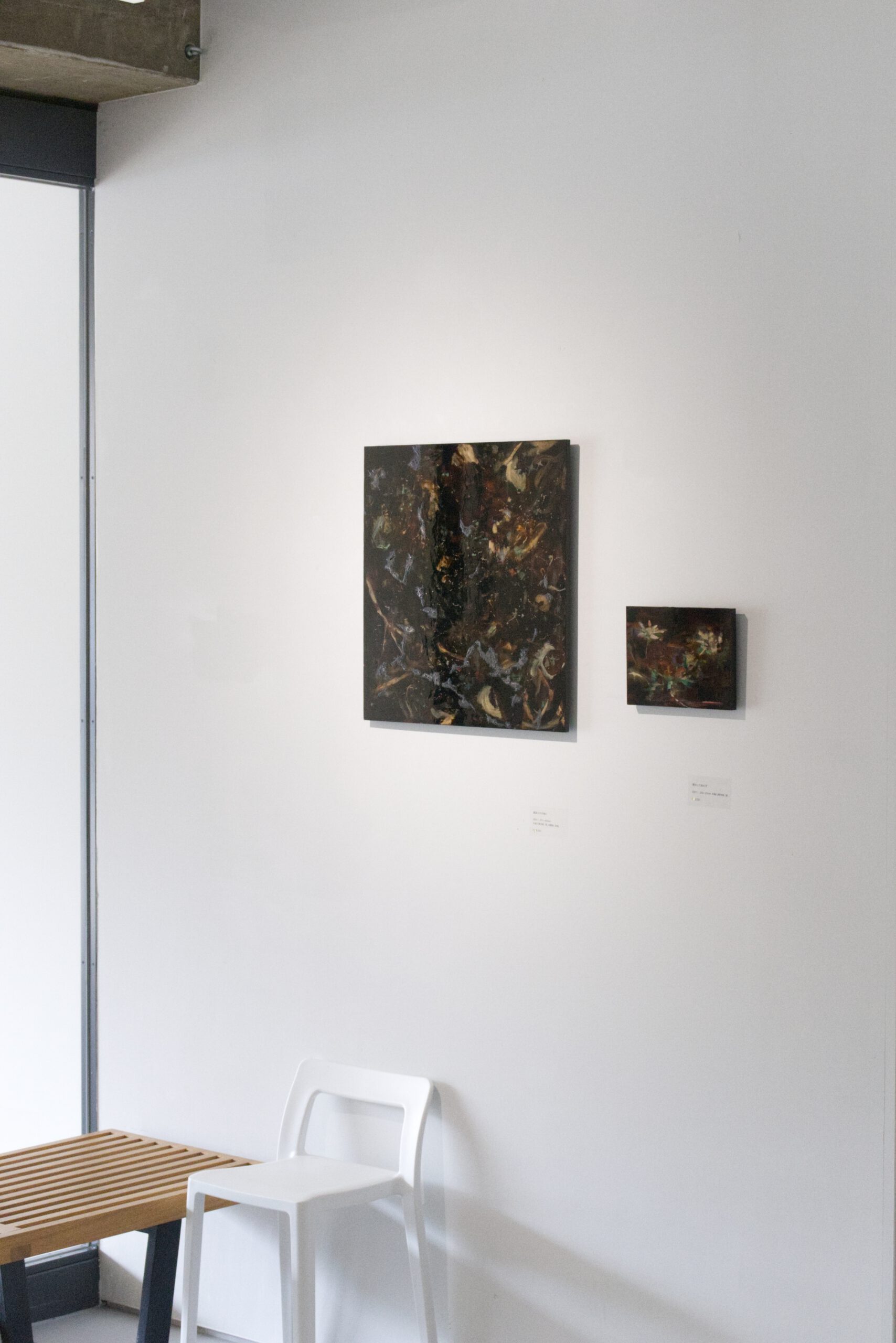
沖田愛有美の絵画は、自然と人間の境界を曖昧にしながら、幻想的な情景を立ち上げる独自の世界を描き出している。何層にも漆を塗り重ねた画面は、時に水面の揺らぎや森のざわめきを想起させ、観る者を現実と夢幻のあわいへと誘う。そこに描かれる人物や生きものは、自然の循環や神話的な物語と結びつき、人間の存在を大いなる環境の一部として示している。漆がもたらす光沢と深みをたたえたテクスチュアは、数年をかけて透明度が増し、内に秘められた層や色彩が徐々に浮かび上がってくるという。その変化は、ゆるやかに呼吸する自然の時間に寄り添うかのようであり、作品に独特の奥行きと生命感を与えている。
もともとは油画を専攻していた沖田だが、大学院の修士課程で伝統的な漆芸技法を習得したことを契機に、漆を画材とする漆画の制作に挑戦するようになる。現代的な感性と独自の表現を漆によってどう描くかを模索し、素材を深く理解し自在に操るための技術を試行錯誤の末に習得した。さらに、追究の果てに「漆画の歴史と制作理論」と題する28万字を超える長大な博士論文を執筆。漆画の発展を作品や作家の事例を通して丹念に検証し、その歴史的背景に裏打ちされた知見を得た。伝統・技術・現代性という三本の矢を束ね、折れることのない表現者としての道を歩んでいる。
アーツ前橋 学芸員
井波吉太郎
A New Form of Lacquer Painting Beyond Tradition
Ayumi Okita’s paintings unfold a distinctive world in which the boundary between nature and humanity grows porous, giving rise to dreamlike and atmospheric scenes. The multilayered surfaces—built through the repeated application of urushi lacquer—evoke the shimmer of water or the rustle of a forest, guiding viewers into the liminal space between reality and the imaginary. The figures and creatures that appear within these works are intertwined with natural cycles and mythological narratives, suggesting that human existence is but one part of a larger environmental continuum.
The lustrous, profound textures unique to lacquer gradually increase in translucency over the course of several years, allowing the hidden layers and colors beneath to emerge. This slow transformation seems to follow the breathing rhythm of nature itself, endowing the works with a singular sense of depth and vitality.
Originally trained in oil painting, Okita’s encounter with traditional urushi techniques during her graduate studies became the turning point that led her to begin creating lacquer paintings. Engaging in continuous experimentation, she mastered the technical skills necessary to understand and handle the material with freedom, while searching for ways to articulate a contemporary sensibility through urushi. Her pursuit culminated in a doctoral dissertation of more than 280,000 words, titled “The History and Production Theory of Lacquer Painting,” in which she rigorously examines the development of lacquer painting through artworks and artists across history. The knowledge gained through this research—rooted in historical context—fortifies her practice, as she brings together the three strands of tradition, technique, and contemporary expression to forge an uncompromising artistic path.
Kichitaro Inami
Curator, Arts Maebashi


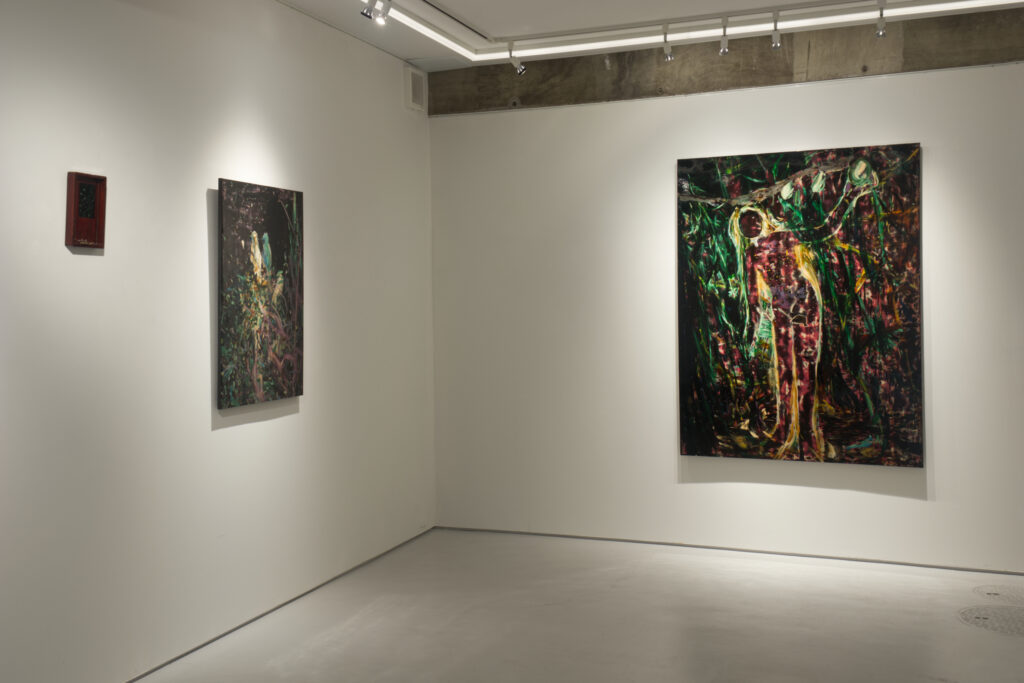


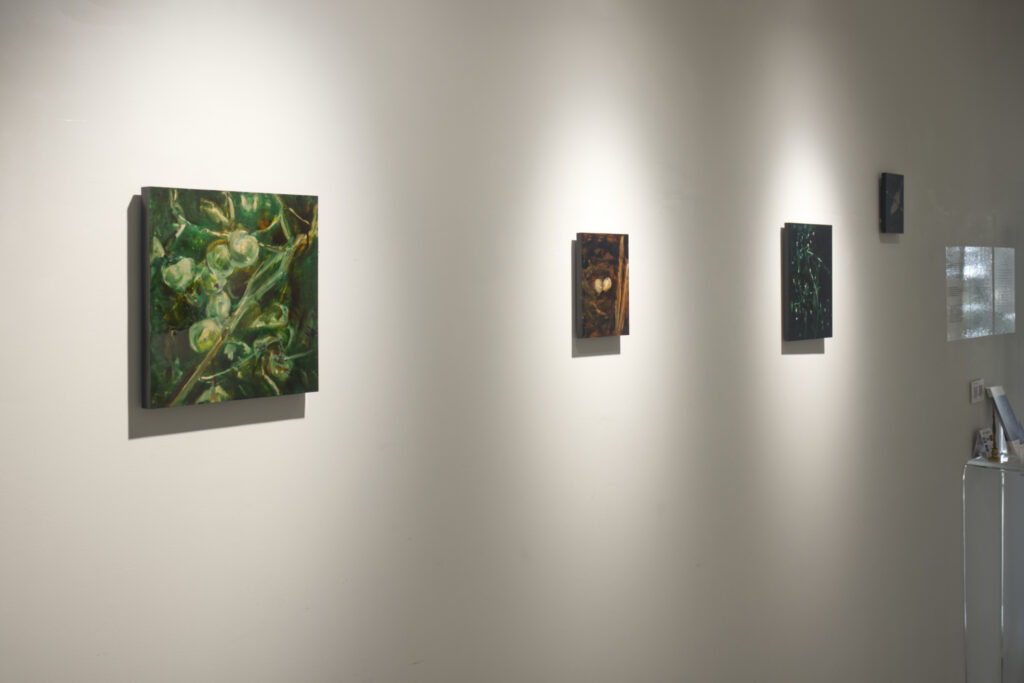




PONTE では2年前に「森」をテーマとした展示を行いましたが、今回は山姥という存在に焦点を当てました。
昔話に登場する山姥は、恐ろしい姿で語られる一方、ときに人を助け、生命力にあふれた存在として描かれてきました。里の規範に縛られず、山でしなやかに生きるその逞しさは、私にとって自然のエネルギーが凝集した女神の姿と重なります。同時に、漆と向き合うときに立ち現れる、目には見えない存在の気配とも響き合うように感じています。
At gallerìa PONTE, we held an exhibition themed on “the forest” two years ago, but this time we have turned our focus to the figure of the yamauba.
In folktales, the yamauba is often portrayed as a fearsome being, yet she is also depicted at times as one who helps people and embodies an abundance of vitality. Her resilient way of living—unbound by the norms of the village and moving flexibly through the mountains—overlaps, for me, with the image of a goddess formed from concentrated natural energy. At the same time, her presence resonates with the invisible sensibilities that emerge when I face urushi, as if the unseen were responding gently from within the material.
HP: https://galleria-ponte.art.coocan.jp/2025/okitaayumi202509/okita2025.html